
 In general terms the liability portion of your homeowner’s policy makes two promises:
1. It pays for the damage you cause to other people’s property and for the injuries you may cause to others. For example, in the case of an auto policy, if you crash into someone else’s car the liability portion of your policy pays to replace their car, and the medical bills due to the bodily injury that you caused to the other party.
2. It pays for your legal defense in the event that you are sued for something covered in the policy. For example, in the case of a homeownwers policy, if someone slips and falls on ice on your front porch, and sues you, the liability portion of the policy would provide coverage to defend you against the suit.
However, there are different types of liability, and that are offered on different types of policies.
Personal Liability – This is a broad form of liability often found on homeowners policy. It provides coverage for the bodily injury and property damage that an insured person is found to be legally responsible for. It can provide coverage on the home’s premise, but also away from the home’s premise.
Premise Liability – This liability form typically is found on dwelling policies where the home is a secondary home (meaning you have personal liability from your primary homeowners policy), a rental property, or a vacant home. It also covers bodily injury and property damage, but it only provides coverage when the cause of the loss is on the insured premise. In other words, if something were to happen at the dwelling because it was unsafe and you were sued, then Premise liability would respond, but unlike personal liability it provides no coverage off the insured premise.
Personal Injury – This liability can be Excluded OR Included on a given policy, so if you want this coverage, you need to make sure the company you have chosen makes it available, and purchase it. Personal Injury excludes things such as False Arrest (keeping someone against their will even for a short period of time), Wrongful Eviction or Entry (Landlords pay attention), Invasion or violation of privacy (Landlords pay attention), and slander and defamation (have any kids on the internet?). You can see why this is important, but this is also often excluded under personal or premise liability, so if you have these exposures (you probably do) you will want to consider adding this to your policy.
How much liability to purchase? That is a good question, and one that only you can make, but more is better which is why we offer an umbrella policy so that you can purchase additional coverage.
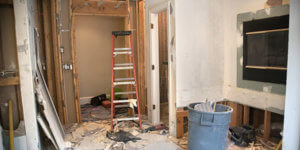 Ahh summer time. A time of fun, sun, and DIY projects around the house. The extra light in the evenings lends itself to getting stuff done. So, I have a question: What did you do this summer? Maybe you’re not a DIY sort of person. Maybe you had a contractor or handyman do it for you.
 Homeowners insurance is all the same, right? So, I should always buy on price, right? Wrong. It’s true that most stick-built homeowner’s insurance policies have a similar base. It’s called an HO3 policy form. It covers your house and other structures for everything, unless its excluded. It covers your personal property for a list of specific things that could happen and pays their actual cash value, it has liability, and medical payments. That’s about everything you need right? Well, not really. While the base policy is very similar from company to company most customers have higher expectations of how their insurance policy will respond. So here are 5 things most customers should consider purchasing to ensure your policy responds like you think and expect it will.
 The insurance industry is weird or is it? Like any industry there are those that want to sell direct through exclusive distributors, those that wholesale through non-exclusive distributors, and those that sell direct online to the consumer. As an independent agent we work with companies that wholesale non-exclusively. Here we try to introduce you to the Insurance Companies We Represent and Why. We represent many different companies to try to ensure you get the best coverage at the best rate year after year.
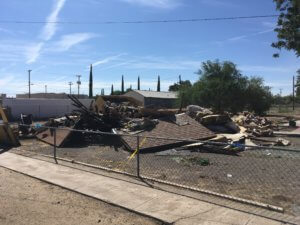 Some coverage is hard to explain, it’s much easier to just say see! That is exactly the case with debris removal. Debris removal isn’t difficult to explain, it’s just the cost to remove the pile of trash your insurance claim just left. If there is a fire, it’s going to be the ashes and rubble, but also the mess the fire department caused while putting it out. Let’s be real they are great a putting out fires, but they aren’t exactly tidy. If there is a flood, we might be looking at all the damaged drywall and installation. Some of it might be moldy or muddy. The point is there is a cost to haul it away. But there is also going to be a cost for the demolition, which can get pretty costly.
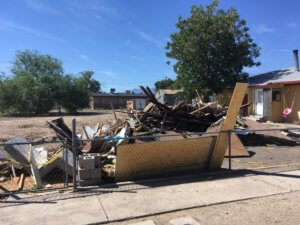 Debris removal is usually included in most property insurance policies, but like most things with an insurance policy there are limits. Depending on where it is commercial insurance or a homeowner’s policy it can vary, but here are some things to consider when it comes to debris removal. How unique is your building? How old is your building? How much space is around your building. All of these and more can cause additional costs in removing debris from your property. Another consideration is building materials. Is there any asbestos in the building? The cost of asbestos disposal adds additional cost to debris removal.
 Homeowner’s Insurance Coverage A is the part of the policy that covers the home or dwelling itself. That seems simple enough, but wait, there’s more. It also covers any structure that is physically attached to the building. By that it means that it can’t be connected by a fence or a utility line, but rather physically attached to the dwelling. This may include attached decks, carports, patio covers.