Successful real estate investors understand the concept of Rinse and Repeat. That is, finding a real estate investing method that works for them, implementing it successfully, and doing it again and again–increasing cash flow and building a legitimate business. For those of us that believe the buy and hold rental model is best and hold 10 or more rentals, insurance can flat out be a pain in the butt. Multiple policies, managing renewals, is just not a great way to spend time when you have a business to run. Imagine a SINGLE policy with all your properties listed, ONE payment, ONE renewal, less paperwork, fewer headaches and better prices on insurance. That’s the 10+ program. It has great coverage options including coverage for:

  • Your home and other structure
  • Your business personal property such as appliances and other landlord furnishings
  • Business Income that protects the loss of your rents if you have a covered loss
  • Liability and Medical Payments
  • Service Line Coverage (protection for the utility lines that run to the house)
  • Breakdown Coverage Option (Coverage that can help replace a broken furnace or repair a washing machine)
  • Flexible deductible options for high cash flowing investment businesses

The program is designed for single to six family dwellings that have no more than two stories. While the bulk of the properties need to be these one to six family dwellings, we can also include condos, manufactured homes, and vacant dwellings (for that occasional fix and flip investment) as long as they are not vacant for 24 months. It is easy to see why investors with multiple properties choose to go with this program. It saves money, increasing your cash flow. It saves time, by eliminating paperwork, and provides great protection for your investments! Start simplifying your insurance life with our 10+ program. To get a quote call us to start the process at 1-877-784-8767 today!

When many investors look at insurance, they simply see it as an expense item, something to drive down cash flow. While we are all looking to maximize cash flow, insurance protects the cash flow that can be obtained during the time you hold the investment.

The first thing insurance protects is the house itself, the dwelling as it is often referred. What is covered? The truth is that it varies based on what you buy. In short there are several levels of coverage. The most commonly purchased coverage for rental investment properties is the DP-3. This policy is similar to an owner occupied HO-3 policy in that it is a special form which means unless the loss was excluded, it will be covered. It is the broadest coverage you can purchase for your investment property. Typical losses like fire, theft, wind and explosion are covered under this policy. There are always some exclusions, and some of the more worrisome exclusions include flood, earthquake and landslide. In most cases, this coverage can be procured, but with a separate policy.

So you have the primary cash producing asset covered. Next are the adjacent structures. These include detached garages, sheds, fences, retaining walls, pools and anything that is that attached to the structure itself. For a lot of rental properties, your desire to insure these items may be limited; however, most DP-3 policies include a limit equal to 10% of the value of the dwelling as coverage for adjacent or “other” structures.

The next piece of coverage for landlord properties is the landlord furnishings. This includes appliances such as refrigerators, washers, dryers, microwaves, ranges or ovens, dishwashers, etc. It also includes any furniture provided to the tenants such as couches, beds, etc.

One of the most important coverage for investors is the fair rental value. If your investment property burns to the ground and you then build a new house, you are out the cash flow that you would have had otherwise received while the home is being built. Yet you are still on the hook for the mortgage. How do you protect yourself? With coverage for the fair rental value, this will pay you as if you had a renter occupying the property.

Liability coverage is a must in today’s society. As an investor you have assets you must protect. Many have learned that separating properties from personal assets in the form of LLCs is a great risk management tactic, but it’s not enough. When sued you will want liability coverage that will not only pay for damages you are legally held liable for, but will also pay for your defense costs. Both the damages and defense costs can be extremely high. As such, it is always a good idea to purchase an umbrella policy, which not only increases your limits of coverage, but also provides coverage in situations where the primary policy will not.

Finally there is medical payments coverage. What happens when someone gets hurt and incurs medical bills? Oftentimes the insurance company will actually pay for the medical damages, so as to say, “we have taken care of you, don’t sue us.”” When it comes down to it, insurance is an expense item, but an important one.

When done right it can ensure you can enjoy the cash flow from your investment for a long time to come, regardless of what mishaps occur.

Gila Insurance Group has put together a landlord insurance checklist of things you should discuss with your insurance agent. While it’s nice to have the list, the question is why are these so important? Here we will break this down, and explain piece by piece why you need to have these conversations.

Investment Property   ______
Proper Property Valuation   ______
The Form – DP3- What’s Covered   ______
Loss Settlement Option for Home   ______
Deductible   ______
Water Backup of Sewer or Drains Coverage   ______
Earthquake   ______
Flood   ______
Ordinance and Law/Building Code Upgrade Coverage   ______

Proper Property Valuation – Did you know that there are penalties for under-insuring your investment property? There are, and if you have under-insured your home you could be getting a lower payout if you have a claim. On the other hand, over insuring your home costs you money that you don’t need to spend. So how do you get it right? There are cost estimator tools, you can speak with a contractor, appraisals sometimes make sense, but mostly they focus on the market value. What we are looking for here is the cost to rebuild the home. That means we take out the value of the land, and focus on the cost to rebuild the home.

The Form – We have spoken about this at great lengths, and have even put together a form comparison chart, but when it comes to landlord insurance policies, these things matter, and investors tend to try to save money anywhere they can to bolster revenue. Don’t mess up your policy by not getting the “special form.”

Loss Settlement – We talked about valuation and replacement cost already, but there is a second piece to this puzzle. If you don’t have the home insured at replacement cost you could be in for a big surprise if you have a claim. Look the bottom-line on a landlord insurance policy is that if there is a claim you want things replaced, right? So you want to purchase replacement cost. In some cases, that might not be available, so make sure you get a stated value or full repair cost option on your policy, but ensure you understand what is being covered.

Deductible – If you want to save money raise your deductible. How high? How much cash do you normally keep on hand? The deductible is the part of the claim you are responsible for paying. It’s the part you pay first. The question is, if you are handy and unlikely to file a claim, then why have a really low deductible?

Water back up of sewers and drains
 – water backs up in toilets, showers, and sinks. It happens. And when it happens the damage can be great. However, in most situations the damage caused by the backup of sewers and drains isn’t covered, but it can be added. Your tenants aren’t you, and are likely to not treat the house the same way you would, so this becomes a very important coverage for landlords.

Earthquake – This is always an excluded coverage, but it can be purchased. Even in California. It can be expensive, but it worth discussing so that you can make an informed decision.

Flood – Again, always excluded, but can be purchased. The truth is that every house, investment property or otherwise, is in a flood zone, some are just in a “high risk” zone. That said, MANY floods that cause damage every year are not in a “high risk” zone. Ask! It might be more affordable than you think.

Ordinance and Law – Look our politicians do crazy stuff. I have even seen green, rather than golden arches. Crazy! So what does ordinance and law or building code upgrade coverage do? If you have a loss at one of your investment properties, and the municipality requires you to make some upgrades due to an ordinance or law that has been passed in the area, this coverage will pay for the increased cost of to repair or replace the damage/home that occur in order to comply with the ordinance or law.

To get a quote on your landlord insurance property start your quote online, and let us shop for you.

LANDLORD FURNISHINGS

A landlord’s insurance policy covers the home and can include insurance for the landlord’s furnishings. This isn’t the renter’s stuff, that needs to be covered under a renters policy, this is your stuff. Coverage for the landlord’s furnishings is important, and should not be overlooked. Why, because even if you aren’t furnishing the home, the value of what you probably will furnish can be significant. Consider this; even if you do not furnish the home there may be a refrigerator, a stove, a microwave, maybe even a washer and dryer. If the microwave is built in to the cabinets then it would be considered part of the building, as would the dishwasher, but those other big ticket items are exactly that, even with those President’s Day Sales Prices. Even on the cheap you are looking at $2,000-$3,000 to replace those items. Maybe that isn’t a big deal, however, given the fact that you will already have a deductible you don’t want to compound your out-of-pocket costs with replacing landlords furnishing. Coverage is relatively cheap, and is worth considering.

Other things to consider, landlord’s furnishings are typically covered for “broad” form coverage not “special” form coverage without being changed. This means your stuff is covered for less than what the home would typically be covered for. If this bother’s you can often change the policy to cover your stuff under a “special” form.

If you are furnishing more than just the basic appliances, it is important to note that theft of landlord’s furnishings will not be covered, so if you are going to rent the home out fully furnished you will want to use other risk management techniques to protect your stuff, whether that be through a large security deposit or in some other way, and never furnish with something you can’t afford to replace.

In 13 years of providing RV insurance we’ve gained a bit of experience. By experience I mean we get asked to insure all types of things. So much so that it necessitates a few definitions.

Since we are talking about RV insurance, let’s start with defining what an RV or Recreational Vehicle is. A Recreational Vehicle comes in two general types–Motorized units and Non-motorized units. Motorized units are Motorhomes. Motorhomes are divided into three classes including Class A, Class B, and Class C. Non-motorized units are typically of the towable variety and include conventional travel trailers, fifth wheels, toy haulers and pop-up campers.

That said, not all “RVs” are insurable. So let’s define what an insurable recreational vehicle is.

While different insurance companies have different appetites for risk, most have very similar definitions of what makes an RV insurable. For example most insurable RVs have the following equipment.

  • Refrigeration equipment
  • LP-Gas / Propane System
  • Bathroom Facilities that are “Built in and Plumbed”
  • Cooking Equipment (think kitchen, not a Coleman)
  • Heating/Air conditioning system that is separate from the system provided by the engine
  • Separate electric power system with a 110V-125V hook up
  • Drinkable water supply system

With few exceptions these are required for all insurable RVs. So, let’s talk exceptions to these hard fast rules.

These items are insurable if the exceptions are met:

Class B Motorhomes, or camper vans – While Camper vans are not required to have all of the equipment provided above, they are still required to have a fresh water hook up and a separate 110 volt electric power hook up. In addition a Class B motorhome must include at least two of the following: sleeping facilities, kitchen or toilet facilities.

Pop-up Camper – no requirements

Truck Camper – again, no requirements

If you have an insurable RV and are in the market for RV insurance contact us today at 877-784-6787 or start your quote online today.

This coverage explanation is for illustration purposes only and is general in nature. Coverage explained here may not apply to your policy, State, company, or situation. For more information about how your policy would respond in the event of a loss, please refer to the terms and conditions and declarations page of your policy.

Perils insurance against, what in the world does that mean. Here’s an insurance guy trying to explain the insurance options for rental property insurance.

Rental Property Insurance Coverage – Section I policy Form – Perils insured against.

Demystifying the stuff coming out of your insurance agent’s mouth

Perils insured against…. What does that mean? Let’s see if I can take off my insurance man hat for a second and put on my investor hat. Why? Because I believe this is where A LOT of insurance folks tend to lose their clients. It’s a simple thing, but we often get too caught up in the insurance lingo when we are explaining this stuff. So, here is my best attempt.

A peril is stuff that happens to cause a loss. So, stuff that happens, for which you are insured, is a covered peril.

Okay. Sometimes you will hear an adjustor or an insurance agent say something like, “in the event of a covered loss.” Well, what in the world is a “covered loss?” How could you know? That’s where the policy form comes into play. Policy forms are like a series of hooks on a wall, so we take our policy and we hang it on a form, then every time we read something like “in the event of a covered loss,” we can look at our hook, and we see if it’s covered in the policy.

Okay, so there are essentially 3 types of “hooks” or options for rental property insurance buyers. There are basic, broad, and special forms. That’s easy, but of course you will often hear agents referring to these as DP-1, DP-2, or a DP-3. This basically says it’s a dwelling policy with this kind of form… Now, each form has a list of stuff that gets covered. Basic being the worst and special being the best. Now that I have gone all insurance guy on you, let me break it down visually so that you can understand it.

THIS IS A GENERALIZATION, CHECK YOUR POLICY! THERE ARE THINGS THAT CAN CHANGE THESE LISTS LIKE THE PROPERTY BEING VACANT OR OTHER FACTORS!

Now before you get all crazy and say, “hey Broad has most of what special has, I bet I can save some money,” slow your roll. Let’s look at that last one; Risk of Loss with Exclusions. What does that mean? It means that unless the insurer specifically excludes it, it’s covered. That is a HUGE difference.  In the first two options the insurer will only cover a handful of things, and if it’s not on the list, then it’s not covered. The last option, the special “hook,” says if it’s not excluded, its covered, which leaves hundreds of covered situations with a handful of exclusions.

LONG STORY SHORT? You’re special so get special. It’s as simple as that.

Start your quote online or call us for an immediate quote 1-877-784-6787.

Home insurance Safford, AZIn general terms the liability portion of your homeowner’s policy makes two promises:

1. It pays for the damage you cause to other people’s property and for the injuries you may cause to others. For example, in the case of an auto policy, if you crash into someone else’s car the liability portion of your policy pays to replace their car, and the medical bills due to the bodily injury that you caused to the other party.

2. It pays for your legal defense in the event that you are sued for something covered in the policy. For example, in the case of a homeownwers policy, if someone slips and falls on ice on your front porch, and sues you, the liability portion of the policy would provide coverage to defend you against the suit.

However, there are different types of liability, and that are offered on different types of policies.

Personal Liability – This is a broad form of liability often found on homeowners policy. It provides coverage for the bodily injury and property damage that an insured person is found to be legally responsible for. It can provide coverage on the home’s premise, but also away from the home’s premise.

Premise Liability – This liability form typically is found on dwelling policies where the home is a secondary home (meaning you have personal liability from your primary homeowners policy), a rental property, or a vacant home. It also covers bodily injury and property damage, but it only provides coverage when the cause of the loss is on the insured premise. In other words, if something were to happen at the dwelling because it was unsafe and you were sued, then Premise liability would respond, but unlike personal liability it provides no coverage off the insured premise.

Personal Injury – This liability can be Excluded OR Included on a given policy, so if you want this coverage, you need to make sure the company you have chosen makes it available, and purchase it. Personal Injury excludes things such as False Arrest (keeping someone against their will even for a short period of time), Wrongful Eviction or Entry (Landlords pay attention), Invasion or violation of privacy (Landlords pay attention), and slander and defamation (have any kids on the internet?). You can see why this is important, but this is also often excluded under personal or premise liability, so if you have these exposures (you probably do) you will want to consider adding this to your policy.

How much liability to purchase? That is a good question, and one that only you can make, but more is better which is why we offer an umbrella policy so that you can purchase additional coverage.

Travel Trailer Insurance Agent Safford, AZWhen we look at what can be broadly classified as “towable” or non-motorized units there are all sorts of variety and nuances can that can be introduced. The long and short of it is that we do provide travel trailer insurance for all sorts units including conventional travel trailers, fifth wheels, toy haulers, and more. In most states we can provide travel trailer insurance for units up to $200,000 in value. Below is how we define each of our insurable travel trailers.
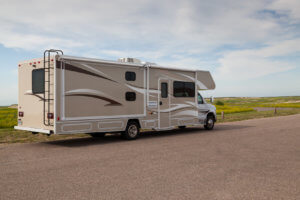
Conventional Travel Trailer Insurance – A conventional travel trailer is one that is towed by bumper or frame hitch. It must include living quarters that include bathroom, kitchen, and sleeping facilities among other requirements. They can be stationary, but there are state limitations.

Fifth Wheel insurance – Fifth wheels are distinguished by their gooseneck hitches that are designed to extend into the bed of a truck, and connect to the ball located in the center of the bed. Similar to conventional travel trailer these must have living facilities, can be stationary subject to limitation. Fifth wheel trailers have several advantages over conventional travel trailer as the goose neck hitch offers better load transfer and weight distribution than bumper hitches. Consequently, there is increased stability resulting in better operator control and safety. Fifth wheels can be hauled by pickup trucks, but also have the versatility of being pulled by medium duty tow unit which are semi-trucks that have been modified to pull fifth wheels.

Toy Hauler insurance – Toy haulers can be of the bumper pull or fifth wheel variety. They must include living quarters, but unlike traditional travel trailers or fifth wheels they also include storage space for items such as ATVs, Motorcycles, or all sorts of things.

Regardless of the type of travel trailer you have, the RV Insurance Professionals at Gila Insurance Group can probably insure it.

This coverage explanation is for illustration purposes only and is general in nature. Coverage explained here may not apply to your policy, State, company, or situation. For more information about how your policy would respond in the event of a loss, please refer to the terms and conditions and declarations page of your policy.

RV Insurance Agent Safford, AZWhen it comes to your RV, auto insurance isn’t good enough. You need specialty RV insurance coverage, and one of the most important things you get with a specialty policy is unique RV Loss Settlement Options. Below is a brief explanation of each of the options.

Actual Cash Value – This is the auto insurance option and in some cases its the only thing you can get. In an actual cash value situation you get the current value of the RV. Meaning you are subject to depreciation. So even if you bought a new unit, you may get significantly less than the purchase price. This is the cheapest option when it comes to premium, but is not the greatest when it comes to a claim, as it pays out the least.

Total Loss Replacement – If you have a total loss, Total Loss Replacement will replace your unit with a new unit. After a while, you will get the purchase price guarantee. Wait, what? Remember the cost of a new unit will increase every year. So total loss replacement would ensure you get a new unit for the first several years (sorry for being vague it varies by company), after the first several years you would get the purchase price of the original unit to go towards the cost of a new unit (which again, may not cover all of it because prices of RVs go up every year).

Purchase Price Guarantee – Purchase Price Guarantee protects you against deprecation. With this option you would get what you paid for the original unit (less the deductible) towards the cost of a new unit. Unfortunately this option has lots of rules that vary by carrier. But some general rules include the fact that this coverage is not available to every RV, and must be applied soon after you buy the unit. Also, the coverage may drop off and will no longer be available after a certain number of years. With this option you premium will increase each year, as your unit gets older. Unfortunately switching a new company with a lower premium means that you will probably lose this coverage and only be able to get Actual Cash Value.

Agreed Value – In some cases you might have an older unit that is worth more than the actual cash value because you have refurbished it. In these cases you will be asked to provide pictures and other proof of the higher value. Then you and the company can agree on a value that will be paid in the event of an accident.

Insurance is a balance, premium on one side, and payout on the other. In some cases the age of the RV will determine the loss settlement, but in other cases understanding the RV Loss Settlement Options available to you can save you a lot of headache in the event of a claim.