
Before You Switch Your Insurance

The insurance market in Arizona is chaotic right now, and rates are climbing across almost every company in the state. As a result, many investors feel real pressure on their already thin cash-flow margins and start looking for savings anywhere they can—often by switching insurance carriers.

As a broker, the goal is to find value for clients: the coverage they actually need at the lowest reasonable price. Value is not just about the premium; it is about protecting the investment while keeping costs in line. In the past, simply moving to a new company often worked, but today things are different—“Not so fast, my friend!”
 

Why Switching Is Riskier Now

In addition to higher rates, insurance companies are tightening their underwriting standards. That means:

  • More detailed questions and paperwork up front

  • Stricter eligibility guidelines

  • Limited coverage options

  • More inspections and tougher inspection standards

Even after a policy is issued and paid for, carriers usually have about 30 days to decide whether they will keep or cancel it. If an inspection uncovers problems, the company can cancel the policy. Once that happens, finding another carrier can become very difficult. That is why it is critical to understand a few key issues before switching.

Five Things To Check Before You Move

1. Plumbing and electrical

If the property has galvanized plumbing or a fuse-based electrical system, most companies will decline it. These older systems are highly associated with costly water and fire losses. Galvanized or polybutylene pipes can fail suddenly, and fuses often signal that the electrical system has not been updated in decades. Upgrading these systems before shopping your insurance can make a huge difference.

2. Peeling paint and dry rot

Peeling or flaking exterior paint seems minor but sends a strong signal to underwriters about overall property maintenance. Sun damage and moisture can lead to dry rot, split fascia boards, and other issues. Many carriers now treat visible exterior neglect as a red flag and will simply walk away. A basic exterior tune-up and fresh paint can help the property pass inspection.

3. Overgrown trees and landscaping

Large, overgrown trees and shrubs raise concerns about roof damage and general upkeep. In a monsoon storm, branches can easily damage roofs, walls, or power lines. Carriers often assume that if the landscaping is not maintained, the rest of the property may be neglected as well. Trimming trees and cleaning up landscaping before an inspection can prevent automatic rejections.

4. Yard clutter and debris

Piles of wood, old vehicles, tools, and miscellaneous debris scattered around the yard are another major red flag. Even if the owner would never allow that at their own home, tenants might. Yard clutter increases fire risk, liability exposures, and pest issues. Clear, written lease terms and regular property checks can help, but before switching carriers, make sure the exterior is clean and orderly.

5. Roof age and condition

Roof issues are becoming one of the biggest reasons for non-renewals and cancellations. Many carriers now require that shingle roofs be replaced within the last 15 years. Some will reject a property if the roof appears older than that; others may limit claim payouts based on age and condition. Missing shingles, curling or warped shingles, and “granular loss” (loss of the protective grit) are all concerns. Even if a roof is rated for 30 years, carriers may still insist on replacement sooner than owners expect.

When Switching Might Make Sense

Insurance brokers want to write policies and help clients save money—but not at the cost of leaving them uninsured after a cancellation. Moving to a new company only to be dropped shortly after helps no one.

Before switching, make sure:

  • Plumbing and electrical systems are updated and acceptable

  • Exterior paint and trim are in good condition

  • Trees and shrubs are trimmed and maintained

  • Clutter and debris are removed from the yard

  • The roof is in good condition and within carrier age guidelines

If those items are in order, shopping for a new company might be a smart move. If not, it may be wiser to address deferred maintenance first and consider switching only after the property is truly ready.


Manufactured Home Insurance Safford, AZIf you have done any research at all you may be wondering, who offers manufactured home insurance? There are basically 6 companies that offer manufactured home insurance, but only 5 that understand the ins and outs of manufactured homes and offer specialty coverage for Manufactured home. Unfortunately many customer are left wondering who these companies are as they don’t spend millions on Super Bowl ads.

Here’s the breakdown:

Foremost – These guys have been doing manufactured home insurance for a long time. In fact, they claim to be the first to have an insurance policy for manufactured home. Foremost is based out of Michigan. They have been in the business for a long time and know the ins and outs. They are a part of the Farmers family of companies.

American Modern Insurance Group – These guys have been around for a long time and Manufactured Home Insurance is their bread and butter. They are based in Cincinnati Ohio, have excellent rates in most states, and address the major coverage issues that manufactured homeowners face. They are apart of a huge multinational corporation called Munich Re.

Aegis – Aegis is a relative new comer to this space formed in 1977. They are based out of Pennsylvania. They are financial strong and have a specialty policy. They have recently made some changes to make their products more competitive and have policies very similar to the other specialty companies.

American Reliable – American reliable has been around since 1952. Based in Scottsdale Arizona, they specialize in manufactured homes and specialty dwellings (rental properties). They have some very unique offerings with their manufactured home policies. In addition to the standard specialty stuff they also offer coverage like service line, and other things that are more like what you might see offered on a standard homeowner’s policy. American Reliable is a member of a bigger company called Global Indemnity.

Assurant – This is the company that Progressive and GEICO use in many states for manufactured home insurance. They do offer some coverage designed for manufactured homeowners, so like any of these companies be sure select it, otherwise your coverage can be lacking. Assurant is a large publicly-traded company.

Others – Yes there are others. In some cases, and states companies like State Farm, Farmers, Allstate, Metlife, Safeco and other MIGHT offer manufactured homes. Usually there are lots of limitations. For example, the home may need to be brand new to qualify. In other cases the companies don’t allow homes that have additions, or sun rooms. In the other cases they require specific type of foundations. In some cases, these limitations limit coverage, and while in some cases the coverage MIGHT be better for the most part you will be better off purchasing coverage from one of the 5 specialty carriers.

The good news

Gila Insurance Group, as a broker actually represents 5 of the 6 manufactured home markets available. For example, we work with Foremost, American Modern, Aegis, American reliable, and in some rare cases can help you get coverage through a Safeco or another standard homeowner’s insurance. So, there is no need to run all over the place getting quotes, you can actually get coverage from 1 place, Gila Insurance Group LLC. Start Your Quote Online Now!

Two common questions we get is what is manufactured home insurance and how is it different than regular homeowner’s insurance? Great questions here are the answers.
What is manufactured home insurance?

Manufactured home insurance is similar to home insurance that covers manufactured or mobile homes. However, there are several differences that while seemingly small, make a big difference when you go to purchase manufactured home insurance.

First What is a Manufactured Home?

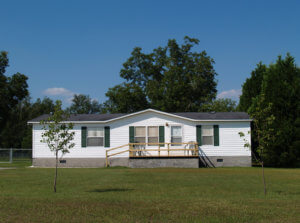
To better understand this question two, we have to understand what a manufactured home is. Manufactured homes include single-wides, double-wides, park models, and all the variations in between. They can be on private property or in parks. Manufactured homes are built in accordance with code set forth by Housing and Urban Development (HUD), a part of the federal government. While similar mobile homes were built before 1976 and were not required to comply with HUD standards.

There are several things that distinguish a manufactured home from a regular home is that they are not built on a foundation, but rather on a steel chassis. They are built in a factory and moved the site of the home mostly completed. The net effect of this several distinguishing features from a regular stick-built home.

First, they depreciate or go down in value over time, rather than appreciate in value. Very important for insurance. Second, by their nature losses to the home tend to have a greater and tend to result in more total losses.

In summary, manufactured homeowner’s insurance is like regular homeowner’s insurance, but takes into account several very important differences like the concept of depreciation.

How is Manufactured Home Insurance coverage different than regular homeowner’s insurance?

On the surface, it may not seem like there are many differences between Manufactured Home Insurance and regular home insurance. After all, both cover the home, your stuff, loss of use of the home, liability, and medical payments. Sometimes homes are even written on what’s called an “HO3” policy form which would make it the same. But there are some differences.

  1. Because manufactured homes depreciate you have to watch the valuation of the home. What does that mean? It means are you getting replacement cost, meaning the home burns to the ground you get a new home of “like kind and quality?” Or are you getting what it is worth today. For older home replacement cost might not be available. You need to know how your policy responds because most regular homeowner’s policies cover replacement regardless of the age of the home.
  2. Because of the depreciation what happens if it’s a partial loss. You want replacement cost for partial losses. Here’s what I mean. Hail storm destroys your roof. On manufactured homes policies you would get paid what the roof is currently worth rather than what it would cost to replace. So, a roof valued at 10,000 that is 10 Years old and has 20 Year shingles, you pay out $5,000 – minus the deductible. On the other hand, if you have full repair cost or replacement cost for partial losses you get $10,000 minus the deductible.
  3. Because of the nature of the HO-3 Policy form your stuff will be covered at actual cash value. Meaning in the event of a loss you might be left haggling with an adjustor. While this can happen on a regular homeowner’s policy too, this is something to look at.
  4. Personal Injury coverage is often not available. It usually can be purchased on a regular homeowner’s policy.

There are more differences, but the differences are very subtle. Your best bet is to ask your agent if they understand the ins and outs of manufactured home insurance and make them explain it to you. At Gila Insurance Group we work with a number of specialty Manufactured home insurance companies and can provide better answers with answers to these questions. Call us today, or start your manufactured home insurance quote now!

Is manufactured home insurance more expensive? The short answer is, unfortunately yes.

Why is it more expensive?

The long answer has to do with basic insurance concepts. Your insurance rate whether for your home, a manufactured home, car or business is calculated by a simple statistics problem. That problem determines what is the chance you have a loss, and how bad will the loss be. Unfortunately for manufactured homes in comparison to a traditional stick built home the answer is the likelihood is higher, and it is likely to be a bigger loss.

Why Are the losses worse?

1976 is a dividing line for mobile and manufactured homes. As in 1976 manufactured homes were required to meet HUD standards. With those standards the quality of homes got significantly better. However, history has shown that when a loss occurs on a manufactured home the companies pay out more. Fires are particularly devastating to everything, but especially manufactured homes. If you have ever seen how quickly they can go up in flames it is startling. Add in the idea that manufactured homes in general depreciate in value rather than appreciate or hold value and you get a whole lot of total losses. Which makes for bad losses, which makes rates go up.

What can you do?

The best thing you can do to fight this is to shop around. There are companies that specialize in manufactured home insurance. While on average the rates are higher, these specialty companies such as Foremost, American Modern, American Reliable, Aegis, and others understand the risk, and often have cheaper rates than the standard home and auto insurance companies. What’s more is that they often have better coverage an account for things like depreciation on total and partial losses. Some of the standard homeowner’s insurance companies will only pay out the actual cash value which is crummy all around.

Gila Insurance Group works with many of the above-mentioned companies and understand the ins and outs of Manufactured home insurance coverage. Contact us today to start a quote and start saving today!

mobile home insurance in Safford, AZFor Mobile Home Insurance, Gila Insurance Group LLC has partnered with American Modern Insurance Group and Foremost Insurance. We know it can be a headache searching for quality mobile home insurance at an affordable price, so we try to provide great options in one place. When it comes to our partners there are several things we look for to help you.

  1. Financial Stability – Both American Modern Insurance Group and Foremost Insurance are A rated carriers, with the financial stability to pay claims.
  2. Excellent Claims Service – You pay for insurance to protect you from financial disaster. Nothing is worse than a bad claims experience after paying all that money. Both American Modern and Foremost pride themselves in industry leading claims service.
  3. Specialty Companies – Manufactured Homes are different, and need special coverage considerations to ensure that you are covered. American Modern and Foremost Insurance lead the manufactured home insurance market.
  4. Easy to use and work with – From competitive rates, multiple payment options, and online policy management we want to make sure you have a company that is easy to work with. Both of our companies do excellent jobs in these areas.
  5. Longevity – These are not Johnny-come-lately companies, both American Modern and Foremost have years of experience protecting mobile homes. Below is a little more about each of our carrier partners.

American Modern Insurance Group Founded: 1965 AM Best Rating: A+ A Member of Munich Reinsurance Company Financial Size – $2 Billion or Greater 

Foremost Insurance Founded: 1957 AM Best Rating: A A Member of Zurich Insurance Group LTD Financial Size – $2 Billion or Greater 

To get a quote with American Modern Insurance Group or Foremost Insurance Company, simply complete our application, we will get quotes from each and will email the quotes for your review.